
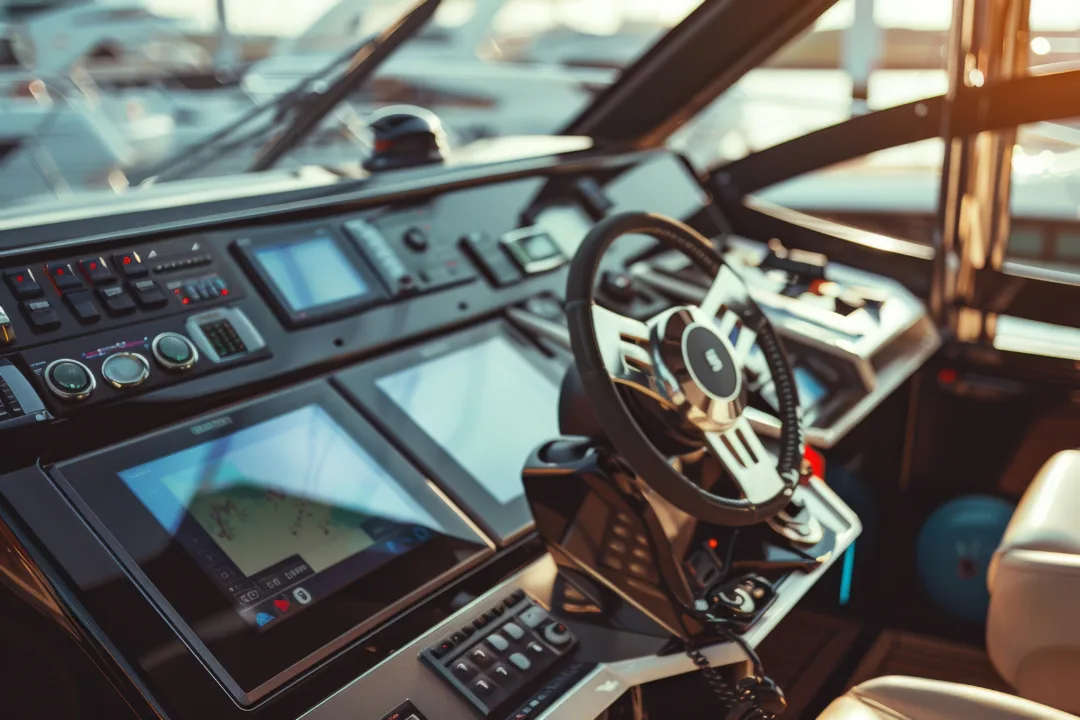
Navigation And Safety Tech For Buyers: What Matters Most in 2026
Navigation and Safety Tech For Buyers
This guide is designed for buyers evaluating yacht navigation tech while shopping for a new or brokerage yacht. Modern vessels rely heavily on integrated electronics for routing, collision avoidance, monitoring systems, and emergency response. As a result, the technology installed on board can significantly affect safety, usability, and long-term ownership costs.
Some buyers prioritize the best marine electronics for 2026, including fully integrated bridge systems and digital switching. Others simply want a reliable list of yacht safety equipment that meets offshore cruising standards.
Whether you’re comparing electronics packages between similar listings or planning upgrades after purchase, understanding the core navigation and safety systems will help you make a confident decision.
Specs or Quick Facts
Today’s navigation suites typically integrate multiple systems into a single touchscreen interface. This integration simplifies operations but can also make compatibility and updates important considerations.
System |
Purpose |
Typical Inclusion |
| Chartplotter/MFD | Central navigation display | Standard on most yachts |
| Radar | Collision avoidance and weather tracking | Often paired with a chartplotter |
| AIS (Automatic Identification System) | Vessel tracking and identification | Increasingly standard |
| Autopilot | Maintains course automatically | Standard on cruising yachts |
| Depth sounder/sonar | Water depth monitoring | Standard equipment |
| Satellite communication | Offshore communication and weather | Optional, depending on size |
| EPIRB | Emergency distress beacon | Required for offshore cruising |
| Fire suppression systems | Engine room safety | Standard in most yachts |
Key Questions Buyers Ask
These questions often come up during surveys and sea trials, when buyers evaluate how the vessel’s systems perform in real conditions.
+ What navigation equipment should every yacht include?
+ How advanced should the electronics package be?
+ Do older systems need replacement after their purpose is served?
+ What safety gear is required for offshore cruising?
+ How easy is it to upgrade navigation technology later?
Decision Factors and Tradeoffs
When evaluating yacht navigation tech, buyers should consider the balance between capability, complexity, and upgrade potential.
Modern integrated systems offer:
+ Seamless chart, radar, and sonar integration
+ Touchscreen helm displays
+ Real-time weather and route planning
+ Digital switching for onboard systems
However, these systems can also introduce tradeoffs.
Potential drawbacks include:
+ Higher replacement costs for integrated components
+ Software updates required for compatibility
+ Learning curves for new users
Meanwhile, simpler systems may lack advanced features but often provide reliability and easier maintenance.
Safety technology also varies by cruising style. For instance, coastal cruisers may prioritize radar and AIS, while long-range yachts often include satellite communication, redundant navigation systems, and enhanced emergency equipment.
Costs and Timelines
Navigation upgrades are common after purchase, especially when buyers want the best marine electronics in 2026.
Upgrade Type |
Typical Timeline |
Notes |
| Chartplotter replacement | 1-2 days | Straightforward swap in most cases |
| Radar installation | 1-3 days | Requires mast or hardtop installation |
| Full electronics suite upgrade | 1-2 weeks | Included wiring and integration |
| Safety equipment updates | 1-3 days | EPIRD, life rant, and alarms |
Costs vary widely depending on vessel size and equipment level. A single chartplotter replacement might cost a few thousand dollars, while a full helm electronics upgrade can reach tens of thousands.
Fortunately, many yachts are designed with upgrade pathways that allow electronics packages to evolve.
What to do Next
If you’re evaluating yachts with a focus on navigation and safety technology, consider the following steps:
1. Compare electronics packages across similar listings
2. Review survey reports for system conditions and compatibility
3. Ask brokers about upgrade history and maintenance records
4. Identity models that already include the best marine electronics for 2026
Working with a knowledgeable broker can also help you evaluate which vessels already meet your navigation requirements and which may benefit from upgrades.
Frequently Asked Questions
How long does this take?
Most electronics upgrades take a few days to two weeks, depending on complexity. Basic replacements such as chartplotters are usually completed quickly.
What does it cost?
Costs vary widely. Small upgrades may cost a few thousand dollars, while fully integrated navigation suites can reach tens of thousands, depending on brand and system size.
What are common mistakes?
Buyers sometimes overlook outdated software, incompatible systems, or limited upgrade capacity. A marine electronics survey can help identify these issues before purchase.
How do I compare options?
Focus on system integration, reliability, ease of use, and upgrade potential. Comparing these factors across listings helps determine which yacht offers the best long-term technology value.