
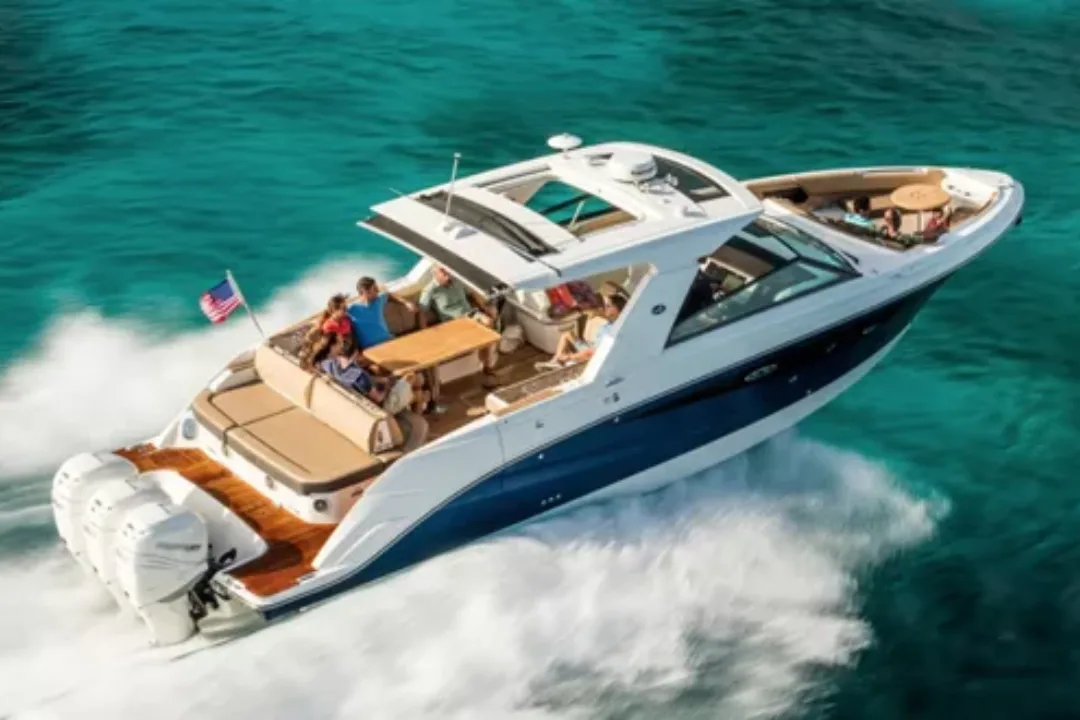
Sea Rays vs Regal Express Cruisers: Build, Performance, and Resale Compared
Sea Ray vs Regal Express Cruisers
Buyers comparing Sea Ray vs Regal are often deciding between lifestyle comfort and refined sport performance in the express cruiser category. Sea Ray appeals to owners seeking broad dealer support, versatile layouts, and mainstream reliability, while Regal attracts buyers who prioritize efficiency, modern styling, and innovative hull technology.
Both brands deliver proven craftsmanship and strong U.S. market presence; the right choice depends on how you plan to spend weekends, entertain guests, and cruise coastal waters.
At a Glance
Category |
Sea Ray |
Regal |
| Founded | 1959 – Knoxville, Tennessee | 1969 – Orlando, Florida |
| Range | 24-40ft express cruisers | 26-42ft express cruisers |
| Construction | Fiberglass & traditional laminates | Lightweight composites & patented hull designs |
| Design Focus | Comfort, social layouts, and ease of ownership | Sleek ergonomics, upscale finish, performance-driven |
| Performance | Smooth ride, stable tracking | Faster acceleration and fuel efficiency |
| Ownership Cost | Accessible parts and service networks | Modern systems may require specialized tech |
| Known For | Mass appeal and resale visibility | Premium features and refined rise quality |
| Best Fit | Family cruising and entertaining | Style-conscious owners wanting a sporty cruising feel |
Build and Layout Notes
Sea Ray: Engineered for comfort, Sea Ray layouts emphasize convertible lounges, cockpit seating, and functional swim platforms. The design language favors versatility, making the brand popular for social day cruising and entry-level owners.
Regal: Regal interiors are more sculpted and contemporary, with attention to helm ergonomics, upholstery detail, and cabin fit-and-finish. Their FasTrac hull design improves handling and efficiency, appealing to performance-minded cruisers.
Both brands offer family-friendly cockpit seating and owner-forward layouts, but Regal generally leans toward premium aesthetic elements and engineering sophistication.
Performance and Range
Sea Ray
+ Prioritizes smooth, predictable ride quality
+ Best for protected coastal cruising, watersports, and day trips
+ Solid handling with focus on comfort over peak speed
Regal
+ Lighter, more responsive hulls with better fuel economy
+ Designed for spirited performance and confident turns
+ Suitable for boaters who enjoy throttle response and sportier acceleration
Ownership and Maintenance
Sea Ray:
Widespread dealer network, readily available parts, and simplified systems make ownership approachable. Ideal for first-time yacht buyers seeking predictable servicing.
Regal:
Slightly more complex systems and technology-driven features may require brand-experienced technicians, but maintenance is offset by efficiency gains and strong engineering.
Annual costs are comparable; differences arise from upgrades, electronics packages, and usage patterns.
Resale and Liquidity
Sea Ray models are well known in brokerage markets, benefiting from their large owner base, parts availability, and high brand recognition.
Regal retains value through premium build perception and niche demand among performance enthusiasts. Fewer units in circulation can mean stronger interest when the right buyer comes along.
Sea Ray often moves faster; Regal may achieve a higher ratio-to-original value depending on model and condition.
Specs or Quick Facts
Brand |
Build Type |
Top Speed |
Hull Style |
Ownership Estimate |
| Sea Ray | Fiberglass laminates | Mid-20s knots | Deep-V planing | Standard service + accessible parts |
| Regal | Composite hulls | High-20s knots | FasTrac stepped hull | Slightly higher tech servicing |
Decision Factors and Tradeoffs
Sea Ray Pros:
+ Broad dealership footprint
+ Easy-to-maintain systems for new owners
+ Strong active resale market
Sea Ray Cons:
+ Less performance-oriented than Regal
+ Traditional styling may feel familiar vs cutting-edge
Regal Pros:
+ Distinctive hull engineering, better efficiency
+ Premium interior finishes and styling
+ Sportier acceleration and ride feel
Regal Cons:
+ Smaller dealer network than Sea Ray
+ Some proprietary components require specialized service
Cost and Timelines
+ Brokerage Purchase: 30–90 days depending on inspections, financing, and survey.
+ Ownership cost: Comparable annual costs, influenced more by usage than brand
+ Servicing intervals: Vary by engine hours, cruising habits, and technology packages
What to do Next
1. Browse listings: Compare Sea Ray and Regal express cruisers currently for sale on Yachtr
2. Connect with a broker: Request performance walk-throughs and resale insight for your shortlist
3. Schedule sea trials: Experience acceleration, cockpit flow, and helm visibility firsthand
Frequently Asked Questions
How long does this take?
Most express cruiser transactions close in 30–90 days, depending on sea trial timing and paperwork readiness.
What does it cost?
Costs vary by size, options, and propulsion, but both brands offer predictable service models for U.S. cruising.
What are common mistakes?
Choosing based solely on cabin layout rather than performance characteristics, or ignoring local service capabilities.
How do I compare options?
Use Yachtr’s comparison tools or consult a broker for a side-by-side analysis of performance, resale, and layout.